



UTO |
|


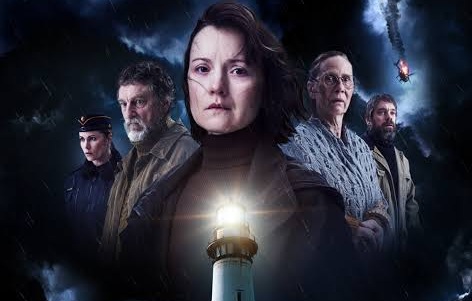
Maria - Elena Leeve Henri - Joonas Saartamo Anton - Ville Vertanen Meri - Kati Outinen Arno - Turkka Mastomaki Sandra - Aamu Milonoff Sebastian - Noa Lange Karri - Amos Brotherus 
Other watery shows Surface Flood Invasion The River The War Between The Land And The Sea 20,000 Leagues Under The Sea
|
AANIAll is not well on the small Finnish island of Uto. Quite apart from the marriage breakdowns and love triangles, there's been a strange, painful noise that wiped out all electricity, including the generators. The birds have left, and not on a usual seasaonal migration, followed by the fish and the rats. There's no communications with the mainland and questions are being asked. A small isolated community beset by strange events is hardly a novel concept, but a Finnish version is a bit of a departure. Nationality aside, there isn't very much that is new here. It is, however, nicely paced and played. We are introduced to the main players early on and establishes their relationships before the weirdness sets in. The pace is slow, reflecting life on the island, and the strange events are introduced gradually, building up a sense of unease. The power cuts are explicable and the animal behaviour is disturbingly different, but the sudden reactivation of the long-defunct loudspeaker warning system is definitely weird. The set up is nicely done, the characters nicely sketched and the mystery nicely introduced. It is interesting to see where this goes. Top VALOA week after the strange noise knocked out the electricity and communications, the community has to face the fact that nobody is coming to their aid. Tempers are beginning to fray. Maria comes up with an escape plan, Arno tries to use the crisis as an opportunity to persuade people to vote for his marina scheme, Anton keeps his rescued man from the sea secret and the love triangle gets a little creepy. The second episode of UTO doesn't raise the pace of the show one iota, concentrating as much on the minutiae of the characters' relationships under this new stress as much as on the mystery of what brought about the crisis in the first place. Maria is trying to hide the troubles between Henri and her from the other village folk whilst they trust him more to help them than they do Maria, despite the fact she is the most active of them all. Arno's attempts to turn the situation to his advantage are desperate and ineffective at best, but he is being pushed by the mysterious man from the mainland, who has revealed nothing about himself. Speaking of revealing nothing, Anton hiding the man from the sea gets a little bit more mysterious as it turns out they are known to each other and possibly linked in other ways. Karri's shadowing of Sebastian and Sarah's relationship is starting to look a lot like stalking and raises the potential for a crime d'amour As for the mystery itself, that is deepening with every turn. All the boats in the village vanish overnight with no explanation. The sinking of the Estonia (mentioned by the briefly functional loudspeakers) happened a while ago and involved Anton in some way. Maria's morse code brings lights from the sea, but they don't stay. What were they and why did they go away. UTO is turning into the love child of LOST and UNDER THE DOME without the theatrics of either. And truth be told, it's fascinating. Top KONTROLLIIt's three weeks since the island was cut off and the food situation is starting to become acute. As rationing goes into effect, people start looking for some higher reason to what is happening. Maria and Henri's marital struggles continue, whilst the youthful love triangle eventually leads to violence. The lights on the horizon are back and Maria determines a risky course of action to get to them. A new viewpoint is revealed. The time jumps between episodes are a bit jarring and you have to wonder what has happened in the intervening periods as the characters remain at the same point in their relationships as they were at the end of the last. It's a small point, because the human stories continue to move forward whilst the mystery does not. Until the last few moments of the episode, at least. The glimpses into the others' lives, such as the recent arrivals to the islands who still feel like outcasts or the older couple who have decided it is the end of days and so there is no point in trying to save food, are nicely handled and it just feels like there should be more of them, showing the slow descent of the islanders into thier own personal hells, rather than just the main characters. Elena Leeve as Maria is the show's main weapon, commanding the story and every scene in which she appears. Hers is the most realised character, whilst some of the others, such as spurned loverboy Karri, are less detailed sketches. Even so, it is these human stories that ground the show whilst the tangled threads of the mystery refuse to give up their secrets. Is the outside world at war, as Anton believes? Who is the man he is secreting in his bunker and what part to either of them play in the situation? Exactly what is Estonian Hans doing on the island and why does he now want detailed plans of it? Is old lady Meri just a dementia sufferer or does she have some sort of connection or insight into what is happening? What is the mysterious fog that the escapees have run into and how is it linked to the noise and tremors? None of these seem likely to be answered any time soon, but the sudden switch of perspective at the end of the episode may hint that more clues are going to be dropped. Top TULIMaria is washed up on shore and has to come to terms with the fallout from her actions, both for the neighbour who accompanied her and for her own marriage. Arno begins to question the motives of his Estonian guest. On the sea, a new commander takes control of the navy ships and chooses not to share all she knows with her crew. A symbol begins to appear significant. This situation is worsening all around. As shortages continue to bite, tempers turn to violence. Resentment simmers. A fragile marriage is blown apart. Everything on the island, it seems, is unravelling. As the relationships of the villagers fall apart, the roles of the two interlopers, the Estonian guest and Anton's man from the sea, seem to be turning more active and less benign. The presence of neither, though, has yet been explained. The inclusion of the scenes from the ships on the horizon, however, do offer some small explanations. There is an electromagnetic barrier in place around the island that is caused by a technology the navy can't explain, but which seems likely to be generated from nearby considering the power it would require. A war is not in the offing and the islanders are the only ones affected. Any approach from outside causes an electromagnestic spike that causes the sound and the dizziness. An attempt to fly a helicopter through a momentary break in the barrier caused the latest and scuppered Maria's escape attempt. These clarifications are welcome, though they don't resolve many of the questions being posed. The obstinate wilfulness of the commanding officer not bring her second in command in on all that she knows seems unnecessary. New questions are raised about the importance of the old lady, the departed child and a spiral symbol that seems to link them. There is also the question of a book regarding a 'Uto Triangle'which seems to hark back to the loss of the ship referred to by the loudspeakers and connected to Anton. The show is reticent to reveal its deeper secrets, but is managing to remain compelling even so. VESIMaria's investigations into the children's drawings leads her further into the island's past and a potential link between Meri and the events taking place. All this, it seems, may have happened before. The Navy undertakes a dangerous mission into the electromagnetically shielded area to recover a flight recorder that may hold secrets as to what is going on. Arno's doubts about the Estonian are growing and the town is moving into the hotel so they use less firewood and can share the last of the food. Maria's investigations seem to show that Meri has some sort of link with Maria's daughter Magda, who Maria sent from the island. Both of them were drawing pictures of the same symbol, a symbol that keeps cropping up all over the island. At the same time, the Navy mission goes awry and information is learned about both the new commander and her second in command. This feels a bit like overegging the pudding, but it's such a decidedly second string storyline that we can forgive it. Events on the island are closing in on the Estonian and the man in Anton's caravan. They seem to be the ones bent on doing bad things and Karri being sent to spy on one of them brings up the cliffhanger ending. There is a sense of the pace beginning to pick up as answers are tantalisingly close to be revealed and individuals close to facing their comeuppance. Fortunately, this continues to be grounded in the stories of the islanders as the situation gets progressively worse PARANOIAKarri is missing, driving Arno to take serious action against the Estonian. The Navy's examination of the recovered black box recorder reveals sounds that cannot exist, a scream coming from the island that can be recorded above the water and below. Maria's investigations into Meri and the island throw up some seemingly impossible information and points at a possible way to escape the island. On the island, Maria's investigation uncovers historical records that suggest that the fortunes of the place were at one point linked to a person called Marni, lived in the mid 1800s, but bears an astonishing resemblance to Meri. It is possible that either Meri is much older than possible, or that the link to the island passes down her genetic line. It is further possible that she manipulated the birth of Maria's daughter in order to pass that link onto the young girl, whose departure coincided with the beginning of the strange events. The Navy's investigation turns towards the Estonian, now identified as having links to Russia and having carried out a lot of land buying along the Finnish coast. Worryingly, in order to get more answers they have to travel into a 'quarantine zone'. Hans, the Estonian, appears to have been conclusively identified as the villain of the piece, but not necessarily responsible for the island's woes. That, it appears, has happened before. Nothing, though, is moving forward with Anton's guest. He is sitting in a basement constructing a bomb for reasons that remain opaque. He is acting all suspicious and evil, which the presence of the bomb supports, but that is not conclusive. Presumably, the last two episodes will resolve that.
Apart from Maria and Henri, the human stories are starting to take a back seat to the ramping up of the main mystery thread. Henri is struggling to move on from the death of his daughter, whilst Maria is still fighting, but is also very close to succumbing to despair. KAAOSViolence comes to the island of Uto. Two murders are discovered and a mob turns on Sebastian and hunts for Hans, with unexpected deadly results. The naval captain's investigation gets inches closer to important revelations and Maria receives an unexpected message from beyond the barrier. Orders for the total destruction of the island are received. It's the penultimate episode and all the slow burn that has gone before erupts into death and answers. Some of this is inevitable and predictable, but it is played to he hilt by everyone and keeps the pace up until we get to the suprising turns of events, be that accidental and deliberate shootings and a strangulation that manages to be both at the same time. So close to the end, some answers are being provided as well. Maria has come to the conclusions about Magda and Meri that were hinted at in the last episode. The sending and receiving of a necklace reinforces the supernatural backstory still underlying the more natural actions of the islanders. The truth about Hans and his plans and his part in the isolation of the island is made clear, as is the astonishing truth about the presence of Anton's man from the sea. That is a twist that has been used elsewhere before, but still manages to be a neat and shocking twist here. The fact that it is resolved so quickly after being revealed is a little disappointing. The episode manages to be an excellent standalone episode in its own right and also sets up the stakes for the finale. Top SURUThe community on Uto is unravelling. Looting and every man for himself has become the order of the day. Maria and Henri take a desperate step. The navy ship's captain takes a leap of faith and the destruction of the island comes ever closer. Following the fireworks of Kaaos, the events of this finale fall a little flat. There was so many developments in the last episode that it was unlikely that this episode could surpass it in terms of narrative twists and turns. This is not to say that there isn't a lot to like about it. The events on the island itself feel like a re-run of the previous episode, but outside of the barrier events move towards a potentially explosive ending. Events on the ship drive the narrative forward and bring us to that conclusion, but there's still a lot of running time once the outcome is achieved. The aftermath is played through at length, focusing on Maria, Henri and Magda, not surprisingly, and their relationship with Meri. The other focus is on the impact of the shootings on Sebastian and Sandra. Here, once again, the characterisations are key and the acting is pretty damn good. For some, there will be long-lingering effects. This post-event section attempts to set up the situation for a follow-up show, though it would have to be very different from this one. It might have been better to have left that alone and come back to it at the start of any subsequent series. The main mystery has been completely laid out from when The Mouth was created, why only the daughters of the island have power over it, why they cannot leave and why Magda is linked to it. This doesn't exactly explain what it is or how it manifests as EMPs or fogbound electromagnetic barriers, but the how is rarely more interesting than the what and why. The ship Captain's backstory is also a little bit more nakedly polemic than the show can properly sustain. UTO has been a pleasant surprise from start to finish with its strong characterisations of essentially ordinary people under extraordinary circumstances and pressure, its compelling central mystery and its slow burn story of a community being crushed by forces it cannot control, or even understand. The acting has been uniformly good with some great standouts. Some of the developments were obvious and predictable, but there were twists and revelations that surprised and even shocked and overall time spent on this island has been time well spent. Top |
SEARCH THE SCI FI FREAK SITE