



DOCTOR WHO |
|

The 11th Hour The Beast Below Victory Of The Daleks The Time Of Angels Flesh And Stone Vampires Of Venice Amy's Choice The Hungry Earth Cold Blood Vincent And The Doctor The Lodger The Pandorica Opens The Big Bang The Christmas Carol The Impossible Astronaut Day Of The Moon The Curse Of The Black Spot The Doctor's Wife The Rebel Flesh The Almost People A Good Man Goes To War Let's Kill Hitler Night Terrors The Girl Who Waited The God Complex Closing Time The Wedding Of River Song The Doctor, The Widow And The Wardrobe Asylum Of The Daleks Dinosaurs On A Spaceship A Town Called Mercy The Power Of Three The Angels Take Manhattan The Snowmen The Bells Of St Johns The Rings of Akhaten Cold War Hide Journey To The Centre Of The TARDIS The Crimson Horror Nightmare In Silver The Name Of The Doctor The Night Of The Doctor The Day Of The Doctor The Time Of The Doctor 
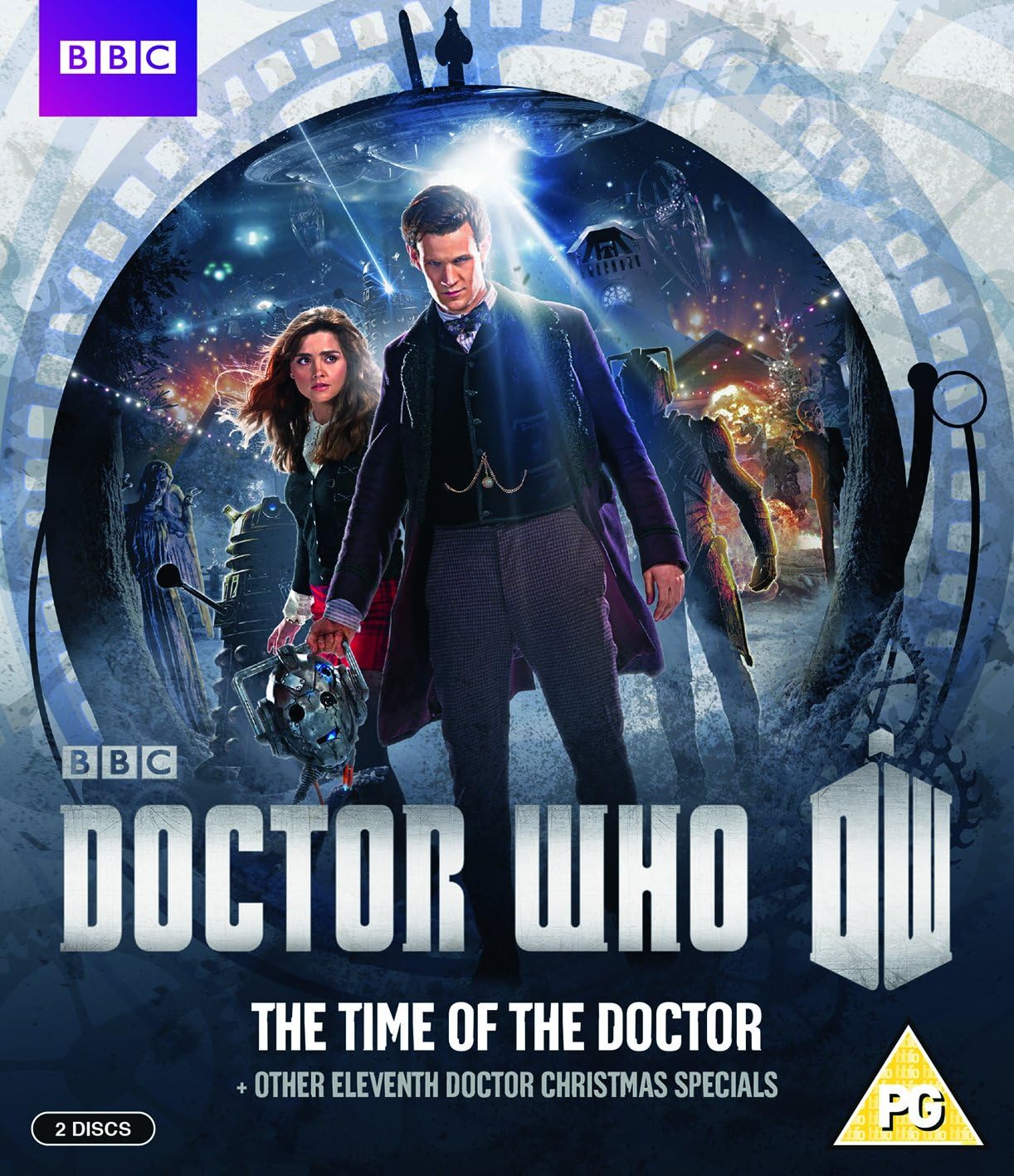
The Doctor - Matt Smith Amy Pond - Karen Gillan Rory - Arthur Darvill River Song - Alex Kingston Clara Oswin - Jenna Louise Colema 

OTHER DOCTORS Tom Baker Christopher Ecclestone David Tennant Peter Capaldi Jodie Whittaker Ncuti Gatwa Doctor Who:The Movie SPIN OFFS Torchwood The Sarah Jane Adventures Class K-9 War Between The Land And The Sea TIME TRAVEL SHOWS Timecop Life on Mars Ashes to Ashes Journeyman Daybreak Goodnight Sweetheart The Flipside of Dominick Hyde
|
THE ELEVENTH HOUR transmitted April 3rd 2010Amelia Pond is a little girl who is afraid of the voices that she can hear through the crack in her wall, but she's not scared of the strange man who fell from the sky in a box, who likes fish fingers in custard and who calls himself The Doctor. He seals the wall and tells her he'll be back for her in five minutes. Twelve years later, The Doctor returns and realises that whilst he sealed the wall, the prisoner who escaped through it is still in Amy's house and now it is a threat to the whole planet as the jailers are closing in and threatening to destroy the whole planet in just twenty minutes. It's a new era for DOCTOR WHO as the new-look show gets not just as new Doctor in the shape of Matt Smith, but also a new head writer in the shape of Steven Moffat. Since he's the writer of some of the best loved episodes of the new look show to date, the question is whether he can hack it as a show runner as well as a jobbing writer. On the evidence of this first episode, the answer is yes. It doesn't start well, though, with a decidedly shonky looking CGI Tardis hurtling through the sky above London with the Doctor hanging out the door and threatening to leave any hope of fathering a new race of Time Lords dangling from the top of Big Ben. Once he crashes down in the back garden of the little Amelia things pick up considerably. OK, so there are all kinds of echoes of previous stories (the escaped convict and chasing police with the humans stuck in the middle of Smith and Jones, the little girl growing up of The Girl in the Fireplace, the woman searching for the Doctor's return and the bridal stylings of The Runaway Bride), but there are plenty of nice touches such as the Doctor going through new foods rather than new clothes, his whole relationship with the little Amelia and the fact that everything he owns is destroyed and renewed before the end, and digs about internet browsing history. Even with all the (we'll be kind and call them) 'homages', the story rattles along nicely with little in the way of time for the audience to catch their breath and the alien jailers make for an arresting (pun intended and we're sorry for it) new alien. Prisoner Zero, however, is a big let down and never looks real for a moment in its true form. When it is in its disguised form it never actually does anything threatening, which makes you wonder why its escape was such a big problem. I mean, it hid inside a house for twelve years and did nothing more than, well hide. And so to Matt Smith, the eleventh to carry the key to the Tardis. On this evidence, he will do quite nicely thank you very much. There's a lot of David Tennant's manic energy in his performance, but there is also enough of him to make it different. It's early days, of course, but he seems to have created a chemistry with Karen Gillan as the fiesty (oh, no not another one of those) female companion Amy. There is also a hint about the plot arc as Prisoner Zero hinted at cracks in the fabric of space and time that the Doctor really ought to know about. So, things are off to a good start for the new Doctor and we can only hope that he can keep this up. Top THE BEAST BELOW transmitted April 10th 2010The Doctor and Amy arrive on Starship UK in the far future. Following the messing up of the Earth, countries stuck their entire populations into spaceships and went in search of new homes. The United Kingdom and Northern Ireland (not Scotland who went in their own ship, of course) is packed inside one giant space vessel, but something is wrong. There is something 'below', something that is being protected by officials in cowls and menacing fortune teller machines and that anyone who finds out about it votes to instantly forget. Second episode in for the new Doctor and this is a crushing disappointment following the promising opening. The idea of Starship UK is a good one, but the plot is staccato and seems to have been stitched together rather than coming as a whole, fully formed idea. Why are the horror fortune telling machines there at all? Why are the mysterious officials all dressed in cowls? Bits of it work, such as the kick ass Liz (possibly the coolest queen we've ever had, played with gusto by Sophie Okenedo) and the idea that a whole population will opt to do the wrong thing if the alternative is bad enough, but there are moments that really don't work, such as the monster vomit and exposed brains. There is plenty here that will appeal to the younger members of the audience, not least because there are younger characters, but older viewers will have a harder time with it. And fans of Terry Pratchett's Discworld novels might find the final shots of the mystery explained look a little too much like a certain turtle. Top VICTORY OF THE DALEKS transmitted April 17th 2010The Doctor returns to wartime London, this time at the behest of the Prime Minister Winston Churchill, who wishes to show him Britain's new secret weapon before it is used. They are called Ironsides, but the Doctor knows them by a more familiar name - Daleks. These Daleks, though, seem to want to help bring the war to an end. Daleks never do anything without a plan and it seems that this time the plan is the Doctor. Following the disjointed disappointment that was The Beast Below, DOCTOR WHO returns to its most famous creations, the Daleks and reinvents them. Exactly why it was necessary to do that is uncertain and there will be many who find the new primary-coloured redesigns far less convincing and scary than almost any version of the Daleks that have gone before. Still, prior to that it is fun to see the old style Daleks offering to make the tea and acting subservient. It's also nice to see the Doctor defeated for a change. Sure, he saved the world, but there is a reason why the title is Victory of the Daleks. They have always been his most formidable enemy and here they prove to be his match. Once they realise that a jammy dodger isn't a Tardis self-destruct device, that is. The show also has one piece of genius up its sleeve to make the audience laugh and cheer (no matter how stupid it is) and that is Spitfires in Space. The sight of Britain's finest warplane taking on an alien spaceship in space is just sheer brilliance. Ian MacNeice's impression of Winston Churchill isn't half bad either. Top THE TIME OF ANGELS transmitted April 24th 2010River Song comes back into the Doctor's life and so do the Weeping Angels, when a visit to a museum unearths a relic with a message carved in it specifically for the Doctor. A spaceship has crashed into an ancient temple, a ship that had a Weeping Angel in its hold. Now the Doctor and Amy need to venture inside the temple with Song's army types to find and destroy the creature that can only move when it is not being looked at. The Weeping Angels became an instant fan favourite when they showed up in Blink, one of the episodes in which the Doctor himself barely appeared. River Song, a woman who knows more about the Doctor's future than is good for him (and delightfully played by Alex Kingston), first appeared in Silence In The Library, comes across as some sort of intergalactic Jane Bond or Indiana Jane, but has hints of a much darker past than she lets on. She is the very definition of the mysterious lady. And the plot? Well, it doesn't quite hang together, but has enough great sequences for that not to matter. Amy being faced with an angel coming out of a TV monitor is the closest in tone to the scares of Blink and the Doctor talking to the disembodied voice of the dead is straight out of Forest of the Dead, but still carries a frisson. And things are moving at such a nice clip that it's a surprise when the music comes and it dawns on the viewer that this is going to be a two-parter (at least). Top FLESH AND STONE transmitted May 1st 2010The army of weeping angels is closing in on the small band of humans and one Time Lord that is evading them. As the group dwindles, the Doctor has to work out what the Angels want and what they are afraid of and why Amy is counting backwards. The second half of this story moves at a fast pace, mainly in the hope that the speed will hide the fact that not a lot of it actually makes much sense. The Doctor creates and escape by altering the artificial gravity, but everyone remains upright instead of crashing onto a new surface; Amy has an angel in her mind and opening her eyes for even a second will let it take her over, but she opens her eyes for much longer than that and when the other angels vanish so does the one in her head, even though it does not suffer the same fate and the Angels can't attack if you're looking at them suddenly becomes they can't move if they think that you're looking at them, negating their weakness since it's just a state of mind and Amy trying to pretend that she hasn't got her eyes closed never looks like anything other than someone who has their eyes closed so how stupid are these angels anyway? Still, there are many moments to savour, such as Amy slowly counting backwards, the death of the group's leader and the Doctor explaining to Amy what is wrong with her. None of that, however, makes up for the attempted seduction scene as Amy throws herself at the Doctor. This could alter the whole dynamic of the show unless there's a good explanation for it. It's nicely handled by Matt Smith, but it takes the show in a direction that it really doesn't need to go. Top VAMPIRES OF VENICE transmitted May 8th 2010The Doctor takes Amy and her intended, Rory, back to Venice in 1850, a romantic location where Amy will forget the feelings that made her throw herself at the Time Lord. Things are not well in the city on stilts, however. A aristocrat-run exclusive school for girls who cannot afford to buy an education harbours something very dark, something that doesn't mind being mistaken for vampires. Toby (BEING HUMAN) Whithouse presents a script that is witty, pacy and full of cracking dialogue for this period story. Admittedly, it all but forgets Amy's behaviour from the tail end of Flesh And Stone (apart from the very funny pre-credits sequence set at Rory's stag night), but it gives all three principals very funny lines and fast-paced interplay. Arthur Darvill makes a welcome addition to the Tardis crew, though it would be nice to see a companion's boyfriend who wasn't a bit of a loser for a change. The exchanges between him and Karen Gillan are very enjoyable. Vampires of Venice is the story where the new set up all clicks together for the first time. Matt Smith is the Doctor and no longer jars. The plot is great fun with scary bits, funny bits and some running through corridors being chased by something nasty. The vampire make up doesn't go over the top and the CGI effects aren't overused. The fact that the doomsday device at the top of the tower has a simple off-switch is very clever and funny and the alien race's motivation would seem almost acceptable. Lose one city to save a whole race; is that such a price to pay? There are niggles, of course, such as the main alien disappearing whilst the Doctor dismantles her plan. Surely, since her race is at stake and they are all her children, she would have been a bit more active to stop him interfering. Niggles though is all these are. The time and place are nicely evoked and some of the dialogue exchanges have a bit more depth to them as well (how people act around the Doctor, the Doctor's history of destroying worlds etc). This is the best episode to date for the new Doctor. Top AMY'S CHOICE transmitted May 15th 2010The Doctor comes back into Amy's life five years later, finding her happily married to Rory in a sleepy little town and expecting a baby. Falling asleep, the trio find themselves in the Tardis hurtling towards a cold star that has wiped out the ship's power grid. Only one of these worlds is real, but if they die in the wrong one then they die for good. What starts off as an interesting and original dilemma for the Doctor starts to descend into more familiar lines as the old people of the village turn out to be aliens on the run from a race that destroyed their world. As for the universe in which the Tardis is being hurtled towards a 'cold sun', not a lot actually happens there. What Simon Nye's story is really about is the inner workings of the Doctor's mind, especially as the 'it was all a dream' resolution (which you should only have when stepping out of a shower, frankly) puts the spotlight firmly on what the Doctor really thinks about himself - and most of those thoughts are less than happy ones. Amy, also, gets her time in the spotlight as she is forced to make her choice, a less than happy one. There are more happy thoughts about the cast. Matt Smith has settled in as the Doctor now and has been accepted, Karen Gillan's fiesty assistant is now a different kind of fiesty from all the others before her and newcomer Arthur Darvill has made himself well at home in the cast. Long may this trio continue. Shame about that ending, though. Top THE HUNGRY EARTH transmitted May 22nd 2010A small family group in Wales have just broken the record for the deepest drilling rig in history, boring down to 21km into the Earth's crust. The Earth, though, starts to fight back, taking first corpses from local graves, but then live humans as well, including Amy. Something is coming up to the surface, something that isn't friendly, something that the Doctor has met before. This is a straightforward enough story - someone drills down, something comes up and the Doctor tries to create a safe place for the humans. The Silurians are an interesting choice of enemy to bring back (having originally been disturbed in the Pertwee era) although these bear no resemblance to those creatures, something the Doctor dismisses with a simple different branch of the species comment. The ground swallowing people up scenes, especially Amy, are well done, but the poisonous tongue CGI is particularly dodgy. The underground city doesn't look real either. It's also hard to understand why a threatened civilisation would send only three warriors to counter the attack upon their city. All of which comes to mind later since Chris Chibnall's story zips along with such pace that the theme music is playing before you realise that this is going to a two-parter. Top COLD BLOOD transmitted May 29th 2010The Doctor is now the prisoner of the lizard people, but even as the military leader starts awakening her army, a new force emerges, one that is willing to listen to the Doctor's pleas for peace. If only the humans hadn't killed the lizard warrior held prisoner on the surface. Following a reasonably controlled and almost claustrophobic first part, this story falls apart into a rambling mess of an episode. There's a pompous, portentous voice over that attempts to give the events some sort of importance, but the episode never decides whether it wants to be running and action or talking about being better humans or taking forward the main plot arc about the cracks in time and space. Everything but the kitchen sink is thrown in, but not that much of it actually sticks. The deaths of the warrior on the surface and the scientist underground have little impact since we barely know them and, in the case of the warrior at least, they were pretty annoying anyway. Stephen Moore's political homoreptilia makes the unconvincing makeup even less convincing and proves to be a fairly dull character, just as his voiceover suggests. The solution to the impending war is too easy (the reptilians just happen to have a convenient failsafe device for allowing the escape?) and the 1,000 year reset and certain characters remaining behind give this an unfinished feeling as though this is a story that the show intends to return to. Only in the last few minutes when a sacrifice is made and the Doctor learns that the cracks in the universe seem to have been caused by an exploding Tardis does the episode come alive and that is really more about the possibilities for the future than what actually happens here. Top VINCENT AND THE DOCTOR transmitted June 5th 2010Whilst visiting the Musee D'Orsay in Paris, the Doctor and Amy discover a monster's face in one of Vincent Van Gogh's paintings. Going back to meet the painter himself, they find a tormented genius. One of the monsters tormenting him, though is very real. It just happens to be invisible. It's not often that an episode of DOCTOR WHO comes with a helpline number for those who might have been affected by matters raised. This is not because it's scary (it really isn't, but you wouldn't expect it to be from writer Richard Curtis), but because it touches on Van gogh's self-harming madness, equating it to clinical depression. These are very serious maters and an episode of DOCTOR WHO isn't going to be able to do them justice, but kudos for trying. Tony Curran makes for a very credible, likeable Vincent who seems to be mainly having a good day (one scene apart) and he enlivens proceedings greatly, which is important because the monster story is clearly an aside and rather tedious. Bill Nighy cameos as a museum guide and it is the museum bookends that provide the best of the story whether it be Vincent seeing how important he will become or Amy learning that you can't save everyone. There are issues, of course, such as how Vincent is the only person who can see the monster, why nobody but the Doctor picked up the monster's face in the painting or how an invisible monster fails to kill the Doctor several times over when it ha ample oportunity, but they all belong to the monster story and that's not the point. DOCTOR WHO tries something different and that allows it to be only a qualified success. Top THE LODGER transmitted June 12th 2010Something is interfering with the Doctor's attempts to land the Tardis. When he is ejected by a violent shock, Amy is left alone in the time machine and the Doctor takes up residence in a room being rented out by Craig. Discovering the joys of football, call centre work and matchmaking between Craig and Sophie, he seems almost oblivious to the activities of the other lodger. The one who lives upstairs. DOCTOR WHO as romantic comedy? That's what this episode is. Popular comic actor James Corden plays Craig who is in love with Sophie, but the pair of them are too shy to admit it out loud. It's going to take several deaths, a Time Lord and the mysterious upstairs neighbour before they finally admit it to each other. Both Corden and Daisy Haggard, who plays Sophie, are very likeable and that sustains events, but there is a definitie feeling that this is a story hung on an episode of a rom com script that didn't get made. Sure it's fun watching the Doctor be the kind of call centre worker that all call centre workers aspire to be, the kind of sunday morning footballer that all sunday morning footballers aspire to be, the interfering neighbour that all interfering neighbours aspire to be, but it's all very slight and seems disconnected from what's actually going on upstairs. The truth about the lodger upstairs is a lot less scary than we are led to believe by the script and the denoument is just a quartet of people shouting at each other loudly in the hope that nobody will notice that it doesn't make a whole load of sense. This is again something new for DOCTOR WHO and again there are incidental pleasures, but it really doesn't quite work. Top THE PANDORICA OPENS transmitted June 19th 2010The mysterious River Song slips her prison and leaves a message that brings the Doctor to Earth in the time of the Roman occupation of Britain. There, she tells him, the Pandorica is opening. Since the Pandorica is a prison reputed to hold the greatest threat to the universe, all the races that the Doctor ever crossed are gathering to find out what lies within. Can the Doctor prevent the opening of the box and stop it from falling into alien hands. The end is nigh and all of the threads that have been running through Steven Moffat's first season as show runner come together in this penultimate episode, setting up a twist that the cannier viewer will see coming a mile off, but which will leave others astonished at the sudden change around. The cliffhangers are surprising and exciting and mean that the season is, for the first time since the opening episode, utterly unmissable. Top THE BIG BANG transmitted June 26th 2010Now that the Doctor has been imprisoned in the Pandorica and the Tardis is exploding in every time whole races, planets and galaxies are being wiped out. Only a few remain, but they only have a little time. They are, however, friends of the Doctor and nobody should underestimate what a Time Lord can do with only a few moments of time. Season finale and there is so much to have explained and impossible situations to get out of. The first issue is dealt with by just ignoring the explanations and racing through the time travel equivalent of a bedroom farce, a be-fezzed Doctor bouncing backwards and forwards in time doing all the things that we had already seen him do, but that he hadn't done yet. Confusing? Not really, but all played at a breakneck speed in the hope that nobody will see all the holes (and there are plenty). As for the impossible situations, the Pandorica proves to be the solution to every problem that it has caused. This science fiction gobbledygook will lose a lot of people, but works if you take the basic premises at face value. It basically comes down to one big reset button, something that Russell T Davies used extensively in his big finales and which the older fans consistently complained about. And how does the Doctor survive? Well it's all down to memory. It always has been. The central theme running through the whole series has been the importance of memory. As Deus Ex Machina get out clauses go it's a bit weak, but it does fit with the rest of the series. For the majority of the audience it will get taken on faith anyway. The Doctor says that it's so and that's good enough for us. Stephen Moffat's first series as show runner has been only a qualified success, but any sort of success is success. Now that the first season is out of the way we can look forward to his first Christmas special and the further adventures of everyone's favourite Time Lord. Top THE CHRISTMAS CAROL transmitted December 25th 2010The space liner on which Amy and Rory are honeymooning starts to crash onto a planet where the fish laden skies are controlled by a man who is willing to let everyone die. The Doctor shows him his past, present and future in order to get him to change his ways and save the (Christmas) day. Reworking Dickens' classic Christmas morality ghost story might have been the starting point for this Christmas special, but it wanders off all over the place on the way to its bittersweet ending. We get fish that swim in the fog, fair enough, but that leads to a shark attack scene stolen from MY SUPER EX-GIRLFRIEND and some ridiculous shark-pulled rickshaw nonsense before getting to the saving grace. There is a woman whose voice can stabilise the crystals in the sky, but who is frozen as security against a bank loan. The Doctor lets her out and shows her a series of memorable Christmas Eve, during which she falls in love with the young man who will become the Scrooge figure. The beautifully-voiced Katherine Jenkins takes on this role more for her vocal talents than her acting ones. She, though, has a tragic secret to reveal, but one that is so obvious everyone will have guessed it long before the script reveals it. This central section holds the necessary magic to fuel a Christmas special allowing the audience to forgive the frantic technobabble nonsense that bookends it. Michael Gambon can do the curmudgeonly old man in his sleep if it was asked of him, so his excellence is a given, but he proves to be something of a secondary figure in the plot, which is a shame. The regular cast are well versed in their roles now and Matt Smith just is the Doctor. It's the first Christmas special of the new order and it's not the best Christmas special that there has been, but it's also not the worst either and there is enough in it that is magical enough to be memorable. Top THE IMPOSSIBLE ASTRONAUT transmitted April 23rd 2011Amy, Rory and River Song are brought together once again by the Doctor, but apparently only to see him killed by an astronaut in a lake. That's a future Doctor, though, and the present one soon turns up and takes on the case of a girl who has been calling President Nixon from a disconnected phone in a warehouse full of aliens that you can only remember when you're looking directly at them. It starts with the Doctor being killed and that's not a spoiler since ithappens straight away. What follows seems a bit like a conglomeration of some of the Doctor's greatest hits cobbled together and given a US background since it is now part financed by BBC America. The astronaut reminds of the ones from Silence in the Library whilst the aliens are a variation on the Weeping Angels and look an awful lot like the Ood. Whether or not there are reasons for that, it is still too familiar for its own good. The sense of distrust that permeates the Tardis in the middle section as the humans keep the secret of his death from the Doctor is a pander to the current sensibilities for dramas with more personal angst and tension, but that runs out once the Doctor walks into the Oval Office and the more normal bright and bouncy tone returns. The cast is completely confident in their respective roles, smoothing out the uneven changes of tone and even managing to look like they are having the time of their lives, especially Alex Kingston as River Song. It is to be hoped, though, that Arthur Darvill's Rory is given more to do in future episodes. Opening the show with a two-parter, especially one that sees the Doctor killed, is a real risk for the show and it will be interesting to see how showrunner Steven Moffat gets out of it, but whilst there are a lot of things to like about the episode, it isn't quite satisfactory. Top DAY OF THE MOON transmitted April 30th 2011Amy, Rory and River are all killed by President Nixon's people. The Doctor is to be imprisoned in a perfect prison. Or is it all a ruse to find out what happened to the little girl in the spacesuit and dealing with the Silence, creatures that are instantly forgotten if you're not looking at them? Steven Moffat clearly believes that DOCTOR WHO should go for plot arcs that run through a whole season or even longer and the story of little girl, the astronaut that killed the Doctor, River Song and the Silence are all aspects of this greater story, a jigsaw that pieces are only being hinted at let alone being made available for builidng up the bigger picture. It's something that the show has rarely flirted with and never for more than a single season and it does risk alienating the younger audience for whom the attention span required to follow all the questions raised is somewhat lacking. And raising questions is what The Day Of The Moon does best. It's a trailer for the plot arc and not a story in its own right. Not a satisfactory one anyway. There are lots of cool moments and images, but they are thrown together in a narrative that doesn't make a whole lot of sense. Why pretend to kill the Doctor's friends and then make the perfect prison for him just to get a private conversation? Surely that could be done inside the Tardis if they all look in different directions and make sure that there aren't any members of the Silence around? What is the point of marking the encounters with the aliens on your skin if you don't remember what they're for? After shooting the little girl in the astronaut's suit do you just let her walk away and flashforward six months? This is all about setting up a flashy, confident vibe rather than making any sense and it's all done at a cracking pace in the hope that (for now at least) it's all a bit smoke and mirrors. One minute it's a con job, then there's a scary gothic horror bit, then there's a fun laser gun shootout, then there's a romantic, character bit. It doesn't all jibe, but a good part of it is fun to watch. How much of this is about pleasing the audience and how much is about pleasing the writers might become clearer as the series develops, but the opening two parter is a departure from the norm and really doesn't quite work. Top THE CURSE OF THE BLACK SPOT transmitted May 7th 2011The Tardis arrives on a pirate ship becalmed at sea and threatened by a siren, a beautiful woman whose song beguiles and who destroys any man with even the slightest cut or bruise. The Doctor will have to find a way to beat this creature, whose touch destroys since Rory just got cut. Following the intrigues and plot arc set ups of the past two weeks, welcome to a rollicking good standalone yarn that is gorgeously shot to boot. Taking pirate tales as its inspiration (TREASURE ISLAND of course) it has all the action, danger and downright fun that DOCTOR WHO should have. It's absolutely entertaining from start to finish. OK, so two ships co-existing in one place on different levels of reality has been done before and the idea of a medical program that doesn't understand enough to function properly is far too recent an idea, but it doesn't matter a jot as there is plenty of nautical nonsense, witty dialogue and even a dramatic, heartstopping bit of tension at the end. It would be nice if the music and sound effects levels could be sorted out a bit as the two captains in the Tardis is nigh on incomprehensible and the last shot where all the crew are free to walk about doesn't really jibe with what's gone before it, but it's a great return to form for the show, shiver our timbers if it ain't. Top THE DOCTOR'S WIFE transmitted May 14th 2011The Doctor is lured to a universe that lies outside our own by the promise of other surviving Time Lords. Instead, he finds an entity that lives on the energy of Tardises. In order to get that energy, it must first transfer the living soul of the Tardis into another receptacle, in this case the body of a woman. Fantasy novelist and screenwriter Neil Gaiman superbly captures the relationship between the Doctor and the Tardis in this charming and absolutely bonkers episode. Forget the rubbish about Amy and Rory being messed about by the entity or about the patchwork people that are an idea taken from The Brain Of Morbius because this is all about the love of a Time Lord and his Type 40 capsule. Suranne Jones gets off to a rocky start as the Tardis gets used to its new body, but soon enough she and Matt Smith are bickering and sparring and just absolutely revelling in the relationship that has been created for them here with some fine moments that the newer audience will love, but the older, longer-serving audience members will recognise and adore from previous episodes. Add to this genuine emotion and heartache and it's probably the best relationship that the Doctor has had since, well since Sarah Jane Smith. Gaiman's script is full of wonderful lines and witty repartee and The Doctor's Wife provides the most delightful episode since Steven Moffat's reign as showrunner began. Bloody marvellous. Top THE REBEL FLESH transmitted May 21st 2011A factory creating remote control doubles is hit by a major storm that causes the doubles to take on the minds of their controllers as well as their outward appearances. The Doctor tries to create a sense of understanding between the two sides, but fear of the unknown and the too familiar work against him. This episode takes the classic elements of a remote and cut off location (in this case the island factory), a dubious scientific process (the creation of doubles), an unfortunate accident (the solar storm) and fear turning to violence. It then welds these elements into a fast-moving adventure tale by setting it in dark tunnels and chambers full of lots of places to hide. On top of the action story, however, it then layers some very big questions. What is the morality of creating artificial remote control people? If a copy is a perfect copy then why does it not have the same rights as the original? If the process is so repugnant then why does the Doctor make a copy of himself (apart from providing a Doctor who can be shot in the opening show of the season)? The assorted cast of visiting characters are just bored workaday types borrowed straight out of ALIEN, but there are a couple of nice performances and Arthur Darvill as Rory has the moment of the episode when he consoles and protects one of the doubles. Big questions, fast action, some witty dialogue. With this, DOCTOR WHO is hitting a vein of form that was missing from the last season. Roll on part 2. Top THE ALMOST PEOPLE transmitted May 28th 2011The Doctor and his Flesh copy try to save both the humans and their 'gangers' from each other, but thoughts of survival turn to revolution and betrayal is so much easier if you look exactly like someone else. The second part of this story avoids the temptation to just have a lot of people running around and messing with technology and continues to play with the morality of the Flesh and the uses that the human race has been putting it to. There are some ethically repugnant moments and some visually cruel ones as well. This is the darkest story of the season to date, the Silence notwithstanding. The cast work hard to make the most of the material and do just that, taking their sketched in roles and fleshing them out nicely, whether as the human or ganger versions. There is also a lot of fun to be had with Matt Smith playing off himself as both the Doctor and his copy. The creation of the Flesh double of the Doctor gives a way out for the death of the Doctor in The Impossible Astronaut and the cliffhanger ending explains away both the visions that Amy has been having and question over her pregnancy. All in all, very good stuff. Top A GOOD MAN GOES TO WAR transmitted June 4th 2011The Doctor scours space for the location of Amy's prison. He gathers together an army of past friends and enemies and prepares for the battle of Demons Run to reclaim Amy and her daughter and to learn at last the secret of River Song. The changing of the show's format continues and this year it is split into two seasons with this episode providing the midseason break and therefore a cliffhanger. There is plenty of action as the Doctor and his team attack and take the facility where Amy is hidden, but there are more surprises along the way. In gathering together an army of familiar faces, Steven Moffat highlights the fact that there are themes that have been used before. Apart from the continuing importance of the Flesh to events, the idea of a battle on a space station, of all the Doctor's past friends/enemies combining forces against a greater evil and the idea that it is the Doctor who is the danger that must be contained are all recycled from earlier times. Fortunately, the story rattles along at such a pace that it doesn't really matter whilst you're watching it. Only afterwards. At least one twist is quite nice and not easy to see coming whilst the big reveal about River Song's identity is something that a lot of people have suspected ever since Amy's pregnancy was first mooted. There are lots of elements here that work, more than a few that don't and it's all sewn together into a patchwork that tries to hide its shortcomings by passing before the eyes very quickly. Top LET'S KILL HITLER transmitted August 27th 2011Mel has been Amy's mess up friend since the beginning, getting into every kind of trouble. The latest trouble is hijacking the Tardis and taking it back to kill Hitler, just for fun. There's more to Mel, however, than meets the eye. There are serious spoilers in this review so don't read on if you don't want to know. Nazis, a shot Tardis and River Song in full on villainess mode are the highlights of this opening episode of the second part of this year's series. It opens weakly with the Mel flashbacks and the weak justification for going back and killing Hitler, but as matters progress things get more interesting and more fun. The human robot crewed and piloted by shrunken humans goes one step too far. Why on earth would anyone build a device that has antibodies that will attack the crew just because they forgot to put on their watch? It's insane and makes no sense. River Song's development also causes her to swap personalities wildly as the plot needs it, from master villainess out to kill the Doctor to loving saviour (the method of the Doctor not dying is signposted so far ahead that it's really not a spoiler) far too quickly. Seeing her as a full-on villainess romping through Nazi Berlin, though, gives Alex Kingston a chance to really let her hair down and it's perhaps a shame that we won't be getting to see more of that because she is far and away the best thing about this Doctor's return, though Matt Smith is still doing the business as the Doctor and Arthur Darvill's Rory goes from strength to strength. Top NIGHT TERRORS transmitted September 3rd 2011The Doctor replies to a cry for help from a young boy who seems to be frightened of everything. As the Doctor tries to determine the source of the power lurking in the boy's closet, Rory and Amy find themselves in a strange, surreal world. The echoes of the David Tennant episode Fear Her are impossible to ignore as there is a child who's fears come to life and the Doctor must deal with those fears. There are also echoes of the eerie dolls from the clockwork robots in The Girl In the Fireplace. The story doesn't seem to make a lot of sense either. Why are Rory and Amy sent to the place where fears are locked away when the child doesn't even know that they are there? The fact that they get all the creepy stuff isn't justification enough. Fortunately, Matt Smith is on hand to cover over the sizeable cracks in all this with another barnstorming performance, but the unsatisfactory storyline and the frankly silly resolution give him a tough job to sell. Top THE GIRL WHO WAITED transmitted September 10th 2011The Tardis lands on world ravaged with a plague that people avoid by entering a different time stream and living out their lives in less than real day, after which they must be killed by robots that declare it to be a 'kindness'. Amy gets lost in this time stream and by the time that he and Rory reach her she had aged more than 30 years. This is a garbled set up that doesn't seem to make a lot of sense. Why are there different coloured door buttons except that Amy needs to push the wrong one? Why are there no attendants at all in the facility? Why are the robots desperately trying to kill her off if the plague will do it anyway? Why build killer robots that are so easily destroyed? None of this is explained in any sort of clarity. That's not what's important though. All of that is just a set up to get two Amys facing each other, one young and vibrant, the other older and bitter. Then Rory is forced to make a decision. It's all in the last few minutes, when Rory meets the older Amy. Considering the time that we have to get to know here, she manages to make enough of an impression to make the decision that the Doctor forces on Rory ('It's not fair. You're turning me into...you') hard to deal with. As Rory and the older Amy declare their love to each other through the Tardis door it's a powerful moment. Certainly far more powerful than the rest of the story deserves and it's down to the performances from Karen Gillan in ageing makeup and especially Arthur Darvill to make it as good as it is and make the episode look far more impressive than it is. Top THE GOD COMPLEX transmitted September 17th 2011Inside a false 1980s hotel, the Doctor, Amy and Rory find everyone's worst nightmare inhabiting a room, but there is something just as scary wandering the hallways and making people worship it before it devours their life force. 'Welcome to the Hotel California' - DOCTOR WHO style. An intriguing set up in a claustrophobic setting doesn't quite evoke the terror that it was aiming for, but there is plenty to enjoy here before the story dishes up a development that could be a game changer. Matt Smith is once again at the heart of all that is good about this, his firing Amy when he finds a 'clever' girl is only partly joking and his energy carries the story across its rocky patches. The alien special effects don't quite come off, reducing the threat that it is supposed to create and the method of its prison and its feeding doesn't make a lot of sense. Who imprisoned it and decided to kidnap innocent victims for it? As for the ending. Well, it's always difficult to say goodbye to companions, if it is really goodbye, that is. Top CLOSING TIME transmitted September 24th 2011In preparation for his death, the Doctor goes back to visit Craig with whom he once boarded. Power outages and tales of metal rats leads him to a mystery that the Cybermen appear to be at the centre of. This could be renames 'LOOK WHO'S TALKING DOCTOR' as there are so many jokes about babies and the Doctor's supposed ability to be able to speak to them. They're not all that funny and the inclusion of a baby in all the running and threatening doesn't increase the threat, only make it less likely that anyone would risk it. The threat itself seems small scale and actually tacked on to the writer's main interest, which is recreating the Craig/Doctor dynamic. It's a bit blokey and really doesn't work, so it needs a bigger alien plotline than it gets. Also, the cybermat with the real, snapping teeth is just awful. Top THE WEDDING OF RIVER SONG transmitted October 1st 2011It's time for the Doctor to finally, irrevocably die. River Song is the chosen assassin, but she refuses to do the deed and suddenly a time paradox is created with all time on Earth happening concurrently. We are told the Doctor must die, but we also know that the BBC isn't about to end its flagship family show and cash cow, so the real interest here is how showrunner Steven Moffat is going to get him out of it. The solution to this is unfortunately telegraphed by an appearance in the 'previously on...' section that gives it away. The bubble universe is quite fun with its pterodactyls and Winston Churchill running the Roman Empire out of London. Amy gets to be James Bond's boss, River gets to snog the Doctor and Rory gets the girl all over again. It's a bit episodic, we're not sure that it quite makes sense and the 'get out' clause is surprisingly straightforward, but it moves at a fair pace and sets up a new direction for the Doctor in seasons to come. Top THE DOCTOR, THE WIDOW AND THE WARDROBE transmitted December 25th 2011The Doctor visits a woman who has yet to tell her children that their pilot father was killed in a wartime bomber run. He gives them a great Christmas, but things get out of hand when a present takes them to a world about to be destroyed. It's Christmas episode time again and this time around it's the Narnia stories that get pillaged for the basic set up that then has a surprisingly ramshackle plot hung on it. The early sequence with the Doctor going all out to create a great Christmas is magical, but once the trip to another world happens then the story goes wildly off the rails, has more ideas than it knows what to do with and comes up with an ending that is nice, but horribly oversweet. The character of the widow (nicely played by Claire Skinner) is the one that gets the most focus, leaving the Doctor almost as a guest in his own show. This is the second Christmas special of the Moffat era and it's not an improvement. Top ASYLUM OF THE DALEKS transmitted September 1st 2012The daleks kidnap the Doctor, Amy and Rory and send them to a planet that is the dumping ground for all the insane daleks there ever were, a place that even they are afraid of. Someone is signalling for help. Asylum Of The Daleks is a stormingly good way to start of the latest series of everyone's favourite Time Lord's adventures. OK, the reason for the daleks kidnapping the Doctor is pretty weak (someone is signalling from their impenetrable, escape-proof madhouse - so what? It's escape-proof), but once the Doctor and companions arrive, they hit the ground running. The humanoid daleks provide for some spooky moments and the whole asylum set up is designed to be creepy, all of which works well, but the script is also honed with reams of sharp, snappy dialogue that makes the character of Oswin a delight from the very moment she first appears. The exchanges between her and the Doctor sparkle whilst Amy and Rory's sparring is well up to the mark. This is possibly the best Moffat-scripted effort since he took over the job of running the whole show. There's a corking twist, loads of humanity and pathos to go with the hi-jinks. The Doctor is back and is on his best form for a while. Top DINOSAURS ON A SPACESHIP transmitted September 8th 2012A spaceship is hurtling earthward and unless the Doctor can deflect it UNIT will obliterate it. With Amy, Rory, Rory's dad, a big game hunter and Queen Nefertiti in tow, the Doctor sets out discovering why there are dinosaurs on this spaceship. Dinosaurs On A Spaceship is a great title. It's clear that the title came first and then the plot was constructed around it because the plotting is pretty pants and the science is horribly off the mark. Why would anyone build a spaceship that can only be steered by people sharing DNA? It makes no sense, except that there needs to be an excuse for Rory's dad to be there. Why bring Queen Nefertiti? Because they can. Why is there a big game hunter there? To provide a macho foil for the women. As for an interplanetary space ark powered by a few waves? Really? That's just an excuse for a beach scene to show off the pterodactyls. Fortunately all of these shortcomings are redeemed by the fact that Chris Chibnall's script is very funny and has enough one liners to keep your attention from all the negatives, whilst it's running at least. The dinosaurs are well-rendered as well, the CGI being used sensibly enough for best effect. The same cannot be said for the horribly unfunny camp robots that are just cringeworthy whenever they are on screen. There's also just enough of a dark edge to keep the whimsy at bay. The villain is willing to torture and hurt people and other things to get what he wants and the Doctor for once is the executioner to his judge and jury. It's a rare moment that is all the nicer for that. Dinosaurs On A Spaceship is a rollicking romp that just about manages to keep the fun going over all the rough spots. Top A TOWN CALLED MERCY transmitted September 15th 2012The Doctor, Amy and Rory encounter a frontier town beseiged by a robot gunslinger. He wants the town doctor, but why? DOCTOR WHO hasn't done a wild west episode for a very long time and so the anticipation for this was very, very high. Unfortunately, the episode failed to really deliver on its promise. Matt Smith is every bit as good as we now expect, revelling in the setting and finding Ben Browder (FARSCAPE) in a criminally underused role is a real treat. 'Underused' also includes Amy and Rory who could easily have not appeared in the episode at all for all that they do. It's a western episode and it references HIGH NOON and WESTWORLD, but it really doesn't make the most of the setting. The main plus of this episode is that we get to see the Doctor's dark side once more. Top THE POWER OF THREE transmitted September 22nd 2012Billions of black cubes appear on Earth overnight. They are completely inert and soon become part of the landscape. Then, when they have been completely accepted, they activate. The idea of a slow invasion is a pretty radical one. The cubes arrive and do nothing. They can't be destroyed, so they just become one more annoyance of life, one more everyday fact. The thing about a slow invasion, however, is that it is also a dull invasion. The cubes become boring and mundane, but that's not the greatest basis for an exciting plot. Building dullness and boredom into a plot is dangerous as it can make your plot, well dull and boring. The beginning, though, has a great air of mystery and the cubes are a brilliant idea. The ending with the revelation that UNIT is under the aegis of a Lethbridge-Stewart once more (a real nod to the fans) has a great deal of pace even if it doesn't make a whole lot of sense (how long does it take before everyone's hearts are restarted?). It's also always fun to watch Matt Smith as this character. In the end, this is perhaps a brave failure and that's better than simply playing it safe. Top THE ANGELS TAKE MANHATTAN transmitted September 29th 2012The gang are visiting New York when Rory is zapped through time to meet River Song and there are statues that move. It's time to say goodbye to Rory and Amy and if you don't want any spoilers then really don't read any further because this whole episode is nothing other than a long set up for the moment that the Doctor says goodbye to his most recent companions. This might explain why the Weeping Angels are now masters of time and space, all apparently without any technology whatsoever. It might explain why a sacrificial solution turns out not to be a solution. It might explain why a paradox worked, but another paradox didn't. It is appropriate that the episode is based on pulp novels and film noir because it's all about the look of the thing and dig too deeply into the plot and it all falls apart. All of which is a shame because it undermines the emotion of the moment and nobility of the act itself. It also completely wastes Alex Kingston's River Song who has never been this uninteresting. This is the end of the mini-series that we get this year. It is a shame that it wasn't a better ending to a better set of episodes. Top THE SNOWMEN transmitted December 25th 2012The Doctor is mourning the loss of the Ponds and has retreated both to and from Earth, using his time there to remodel the Tardis and mope. A chance encounter with a barmaid-cum-governess reignites the Time Lord's spark and he becomes involved in a plot surrounding carnivorous snowmen and icy schoolmarms. The latest of DOCTOR WHO's Christmas specials is as much a matter of misses over hits as any of the others, never quite bringing all of its elements together into anything that is coherent or as magical as it thinks it is. There are things to like, of course, such as the reappearance of Jenna Louise Coleman as the governess who moonlights as a bar tavern (like yes, of course, everyone does that) and has the wit and intelligence to take on the Doctor at his own games. The setting of the TARDIS on a cloud allows for a whole lot of rather charming whimsy (the best thing about the episode) and the newly remodelled TARDIS interior is as nice as it is superfluous. There are, however, things not to like as well. Firstly, there is the plot, which seems to go nowhere very fast and is really just an excuse to get the Doctor and his new companion together (again). There is one surprise toward the end, but the rest really is a flimsy framework that doesn't stand up to that much scrutiny. There are the eponymous snowmen, who are wonderful in concept and realisation, but never actually do anything. There is the governess made of ice who is a rather poor special effect that never actually seems to do anything. And then there is hiring Richard E Grant as the villain of the piece and then getting him to do, well to do not very much at all. There are also the small gang of aliens looking after the Doctor whose presence achieves, well not very much. THE SNOWMEN might work as part of the ongoing plot behind who the Doctor's new companion is, but as a standalone Christmas story it is thin and not very exciting. Top THE BELLS OF ST JOHNS transmitted March 30th 2013The Doctor is called back from a monastic retreat by a telephone call to the TARDIS from Clara Oswin. He immediately transports to the present where he finds Clara caught up in a plot by someone to download human consciousnesses into a computer. She is the next target, but the Doctor isn't about to let her die again. The new episode brings the Doctor finally into the life of his new assistant for more than a single story, but it then doesn't give either of them a story in which to shine. The robots stealing people's minds are pretty poorly realised and the Doctor riding a motorcycle up the side of a tower block never looks anything but fake. Matt Smith is his manic self as the Doctor, but he really isn't given that much to do and the aim of the story would seem to be getting the relationship between the Doctor and Clara kickstarted, but sadly Clara here is nothing like as much fun as she was in her previous two appearances. Instead, she comes across just like Rose Tyler with a different name, which is a very big shame. Still, now that they're together we can hope for better things and the episode does at least explain why Richard E Grant took the Christmas special gig after all. Top THE RINGS OF AKHATEN transmitted April 6th 2013The Doctor takes Clara to see a special event in a distant part of the universe, where she meets the frightened young girl the ceremony depends upon. Things don't quite go to plan and something big and nasty starts to awaken. Now this is much more like it. This episode has an epic scope that the show hasn't attempted in quite a while. There are sweeping space vistas and a monster that is so big it is never quite visualised. Even the Doctor is overwhelmed by it. 'The Rings of Akhaten' is an episode that dares to be different. It starts with a sweet little prologue that then feeds into the big climax and resolves the situation, though exactly how that works is a little bit vague. The Doctor is faced with a situation that is beyond him and has to be rescued first by a little girl's song and then by Clara. That's a nice twist and shows the Doctor a little differently for a change. It's true that there are echoes of every time the Doctor takes a new companion into space and the alien market is a not unfamiliar sight, but the slow-starting plot ramps up nicely, has some nice lines and the new pairing of Matt Smith and Jenna Louise Coleman is coming along nicely. Top COLD WAR transmitted April 13th 2013The Doctor and Clara find themselves on a Soviet sub that is sinking in the middle of the cold war. Aboard is a menace that is even more dangerous than the pressure of the sea around them. It's DOCTOR WHO's fiftieth year and this is the first classic monster that makes a return and gets a very nice little tension-filled story that is all about war and threat and danger and honour. It's nicely pulled together by writer Mark Gatiss who gets the reassuring presence of Liam Cunningham and David Warner as Russian crew members even though neither is given enough to do. Clearly the stars want to take part in this anniversary year even more than most. The loss of the TARDIS, the obvious escape route, is a little weak, but most everything else works well and the setting aboard the submarine is excellent. It's certainly a long way from the recent episodes, mixing things up nicely. This second set of episodes for 2012 has hit a vein of form. Let us hope that it can maintain it. Top HIDE transmitted April 20th 2013Caliburn House is haunted by something and the Doctor and Clara show up to help a pair of ghost hunters find out the surprising truth behind it. Welcome to the Haunting of Hill House. Well, Caliburb House actually, but the number of nods toward the classic novel by Shirley Jackson are far too numerous to mention. The old house, the idea that the ghost "knows I'm here", the banging sounds from the film THE HAUNTING, the holding of hands with something that isn't there .... we can go on. There are also nods to POLTERGEIST's passing through supernatural portals and then the presence of one of the blue crystals of Metebelis 3 (the third Doctor story Planet Of The Spiders and the not quite sure where it is Eye Of Harmony are both massive shout outs to fans of the classic series. Despite the derivative nature of the plot, the early section is suitably spooky and with more than a few light chills along the way. Then, when the true nature of the haunting becomes clear, it morphs into something much more straightforward, predictable and a bit less fun. The presence of Dougray Scott gives instant star wattage, along with the also, but slightly less, know Jessica Raine, but the plot at least gives them plenty to do. The sudden sugariness at the end is unfortunate, but could have been a lot, lot worse. HIDE is the third cracking episode in a row. It looks like Moffat's version of the show might be finding its best run of form yet. Top JOURNEY TO THE CENTRE OF THE TARDIS transmitted April 27th 2013A salvage vessel damages the TARDIS and the Doctor must attempt to save Clara from some threatening figures within its many rooms. It's a long time since we last got a tour of the inside of the TARDIS and so this episode was hotly anticipated. To say that it is a qualified success is probably as far as it is possible to go. The glimpses inside the TARDIS vary from the wonderful (the architecture-altering circuit room, the swimming pool, the library, the Eye Of Harmony) to the mundane (sub-STAR TREK corridors and more sub-STAR TREK corridors). For the most part, however, this is a journey that was worth taking. The rest of the story, however, was far less satisfactory. The creatures that are wandering around threatening everyone are apparently future echoes of the characters and yet they want to kill their past selves rather than warn them. What's that all about? Then there is the small matter of two brothers persuading the third that he's an android - as a joke. Oh really? There's also the matter of the giant reset button that is pressed before the end. A plot device used often by Russel T Davies (and just as often complained about) its use here is only excused by the fact that the huge reset button is, in fact, a huge reset button. Top THE CRIMSON HORROR transmitted May 4th 2013A dead man's eye holds an image of a screaming Doctor. Madame Vastra, Jenny and Strax investigate and are led to utopian society Sweetville and the villainous Mrs Gillyflower. After last week's disappointing episode, matters slip even further with this Mark Gatiss-scripted 'comedy' outing. The Thomas Thomas joke alone was enough to wipe out any credibility that the episode had, but the character of Strax ('comedy' Sontaran) and the ever-fainting client of Madame Vastra added extra nails to the coffin. That said, Diana Rigg was glorious as the mad Mrs Gillyflower and her relationship with her blinded daughter Ada was the standout of the episode. These were the two characters that had some depth to them, rather than just being used for pratfalls and punchlines. The reference to Bourneville, the utopian worker's paradise of the Victorian era, was a lovely touch and having it turning out to be an empty shell was great. The inclusion of the Victorian trio of Vastra, Jenny and Strax was less so. It would appear that there is an attempt to get interest in a spin off show starring these three going, but for Victorian shenanigans we'd prefer to see HG Wells' adventures from WAREHOUSE 13. The leech monster thing was also a poor effect. A misfiring episode, then, and possibly the poorest one of this latest half-season. Top NIGHTMARE IN SILVER transmitted May 11th 2013The Doctor takes Clara and her two young wards to the best theme park in the universe only to find it closed and overrun with the almost-completely invincible Cybermen. When the Doctor is targeted for upgrading, the 'almost-completely' tag looks like being dropped. Neil Gaiman wrote The Doctor's Wife and gave us the best episode of the Moffat era and one of the best of the modern series. The pressure for him to deliver on his second script was therefore huge and something that was going to be most unlikely. It's true that 'Nightmare in Silver' is no The Doctor's Wife, but it is still an excellent episode. The setting is distinctly Gaimanesque in the abandoned, rotting theme park. There are lots of good lines and nice touches, plenty of character moments and a character reveal that is obvious from a very, very early stage. The climax is a bit Deus Ex Machina, but then that's no surprise with DOCTOR WHO. What Gaiman manages to do in his script is to give all of the characters (even the pretty nameless troops) some depth. In lesser hands, they would have been barely registering cannon fodder, but here we quickly come to like them all. Warwick Davis makes for a charming rogue who real identity is never in any doubt. The Cybermen have never quite had the frisson of the Daleks, but here we see them using their abilities quite cleverly and there is no doubt that the sight of an army of them was pretty impressive. The central point, though, and the highlight too, was Matt Smith talking to himself. Battling inside his own brain for control with an invading Cybercontroller, the sequences interwove the two characters arguing inside his mind and also conversing with Clara, who was never quite sure which one of them she was speaking to. It was occasionally confusing as to which of the two he was at times because of the speed of the dialogue, but it was also a bravura performance form Smith. Gaiman has pulled off a great episode and restored the balance after some lesser ones. Bring on the finale next week. Top THE NAME OF THE DOCTOR transmitted May 18th 2013Trenzalore is the most dangerous place in the universe for the Doctor, the one place that he must not go. Clara, the impossible girl who has been in his life forever, must go with him there when his friends are taken prisoner. Someone has a dastardly plan that might end the Doctor before he even began. We've been critical of these last set of episodes, and of Steven Moffat's reign in charge if truth be told, but the man does know how to write a good episodes and with The Name Of The Doctor, he remembers that fact. True, we don't get to know the Doctor's name (which is a promise broken) and true it features the Keystone Cops trio of Vastra, Jenny and Strax (look, if the BBC haven't commissioned a spin-off yet, just give up on it will you?), but those quibbles aside, there was very little you could say was wrong with this episode. The atmosphere of impending doom was brilliantly portrayed, with Matt Smith's Doctor breaking down into tears and showing real fear at what lies ahead for him at Trenzalore. Richard E Grant is back again as the Great Intelligence and this time he is given something to do. His plan really is nasty and, more importantly, it is the cause of Clara. Yes, Steven Moffat has made good on his promise to explain Clara and it is an excellent explanation that has been carefully crafted and starts delightfully here with Jenna Louise Coleman appearing alongside almost all of the previous Doctors. The tease of this leads onto the revelations about what happens after a Time Lord dies and how the Great Intelligence intends to strip away the Doctor's entire lives. Add to that a wrenching goodbye to River Song (as if she will ever really be gone) and some killer one liners and this is the best episode of DOCTOR WHO since ... well since The Doctor's Wife. But even that wasn't enough. In the dying seconds, the conundrum is set up for the big 50th anniversary episode and now we just can't wait for that to roll around. We haven't had much cause to say it recently, but Bravo, Mr Moffat, Bravo. Top THE NIGHT OF THE DOCTOR transmitted November 16th 2013The Eighth incarnation of the Doctor has been unsuccessfully fighting in the Time War. He has become a figure feared by many that he is trying to save. When his latest act of heroism fails because of who he is perceived to be, he determines that it is time for a new kind of Doctor to emerge. A mini-episode created for the fiftieth anniversary celebration, The Night Of The Doctor sees Paul McGann return to the role, if only to fill in the gap between his incarnation and that of John Hurt, seen briefly at the end of The Name Of The Doctor. This is an unashamed gift to the long-time viewers of the show and will have little significance to those who weren't watching when McGann made his only appearance in the abortive attempt to reboot the show back in 1996. That said, it is lovely to see what might have been as he gets another outing. There is absolutely no doubt that he would have been a great Doctor and the proof is here. Short it may be, but there is an awful lot of Doctorly goodness packed in there. The sets are excellent, the plot is compact and, due to the short running time, lean and mean and one of Moffat's better efforts. It bodes well for the upcoming fiftieth anniversary special Top THE DAY OF THE DOCTOR transmitted November 23rd 2013The Doctor discovers that the Zygons are trying to take over Earth and teams up with his previous incarnation to stop them, but they are joined by another incarnation, The War Doctor, who once did a terrible, terrible thing and who they have been trying to forget ever since. The fiftieth anniversary of DOCTOR WHO arrives and it is something to be celebrated. And how the BBC have celebrated. This episode was produced in 3D and shown in cinemas around the world at the same time as the national broadcast. Now that is confidence in the final product and you can see why. THE DAY OF THE DOCTOR looks great. There are stunning Time War scenes, lush Elizabethan England landscapes, desolate desert planetscapes, fabulously recreated Zygons and three-dimensional paintings of the end of Gallifrey. Anniversary stories, like Christmas specials, are something of a difficult area to tackle and Stephen Moffat's story stumbles as often as it flies. Yes, David Tennant is back and on fine form as the 10th Doctor (and no, we're not going to start renumbering - John Hurt is billed as the War Doctor). He fits in nicely with Matt Smith's 11th Doctor and there is lots of banter run past at a million miles an hour. Yes, Billie Piper returns as Rose Tyler, but not as Rose Tyler and she manages to give a performance that is probably better than anything that she ever did on the show in her initial run. Playing against John Hurt's Doctor rather than David Tennant certainly seems to have agreed with her. Ah yes, John Hurt as the Doctor that the Doctor tried to forget. It was impossible to expect that Hurt would be anything less than great in the role of the Doctor and he lives up to expectations. This incarnation turns out to be surprisingly light and witty, considering his role in the Time War and his great and terrible act. His interaction with his younger (but older) incarnations provides some of the more wonderful moments. Make no mistake, John Hurt IS the Doctor. Which brings us to the plot. It's a bit of a curate's egg to say the least. The Time War storyline, with Hurt stealing the ultimate weapon (a weapon that is so terrible it will try and talk him out of using it) is top drawer and everything that we could expect for the fiftieth. It's epic and touching and dramatic and funny and everything that DOCTOR WHO should be. The Elizabethan shenanigans with the Zygons, though, prove to be less fantastic, making not a huge amount of sense and proving to be a lot of punchlines without a coherent background. In fact, the whole storyline gets abandoned midstream once it has served its purpose in the larger scheme of things. And then there are the fan-pleasing moments that make less sense. What a thrill to see and hear Tom Baker as 'the curator', but the conversation is just a teasing, confusing play by Moffat. It's a lovely tribute to Baker, but it really ought to have been played by someone else to keep it sensible. And the whole unlocked cell door thing is a great punchline, but total nonsense. THE DAY OF THE DOCTOR had to do a lot of things and cover a lot of bases and please everyone. It was an impossible task and we should be grateful that it came out so well. Perfect it's not, but in the circumstances it's a very fine (if flawed) success and worthy of its historic place within the half-century history of the show. Top THE TIME OF THE DOCTOR transmitted December 25th 2013The universe gathers around a small planet from which a message is issuing. Everyone is too scared to go down, but not the Doctor. There, he discovers a small town called Christmas and determines to defend it against those who will inevitably wish to see it destroyed, even if it takes him the rest of his life. Matt Smith is leaving DOCTOR WHO. That's all that you need to know to understand what this mess of an episode is all about. Stephen Moffat wants to give him a send-off that is as meaningful and heart-wrenching and dramatic as that given to David Tennant and so structures the whole storyline around that one moment - the final death of the Doctor. This is a bit of problem, though, because we already know that there will be a new Doctor and who he is, so the idea that this might be the final death of the Doctor holds no weight at all. All of the pathos and gravitas that Moffat tries to heap onto the approaching moment just runs off because we know it's not the end. That's a shame because Matt Smith gives a lovely performance as the ageing (yes, ageing) Doctor that ranks as amongst the best that he has ever given. The main storyline, based around the other races of the universe (though mainly the daleks) being afraid of Gallifrey's return (and with it the Time War) and wishing to destroy the place is muffled and poorly told, not least because it's only there to give an excuse for the Doctor to remain in one place long enough to grow old. Whole chunks of his life (centuries) are passed over and, if truth be told, it's all a little bit dull. Yes, there's a wooden Cyberman (fantastic) and yes, Clara keeps failing to have Christmas lunch with her family, but there's the relationship with a Cyberman head that is ripped off from Tom Hanks in CASTAWAY for heaven's sake and which is there only to give a moment of pathos when it 'dies', a moment that has very little pathos in it since we never got to know and care about it in the first place. Orla Brady's Tasha Lem is a great character who is given no time to be more than a cypher and having the daleks around is a sop to the fans of the daleks because they have very little to do with the main plot. THE DAY OF THE DOCTOR is about saying goodbye to Matt Smith, who buried all our worries right from the start. His episodes haven't been the best, but not because of him. His Doctor was a triumph and it's a bit of shame that his final moments weren't so triumphal. Top |